-
This brief is part of a series of publications MIP has released that was originally researched and compiled as a technical assistance memo to a participating member city. This memo was written in 2023 in response to a specific research question submitted by that member city. To make this publicly available, we’ve removed references to the original request and any location-specific recommendations.
For context, the original research question that prompted this memo was: What are the best practices for LGBTQ+ folks experiencing homelessness, particularly youth?
Document -
This brief is part of a series of publications MIP has released that was originally researched and compiled as a technical assistance memo to a participating member city. This memo was written in 2022 in response to a specific research question submitted by that member city. To make this publicly available, we’ve removed references to the original request and any location-specific recommendations.
For context, the original research question that prompted this memo was: The City is interested in ways to prioritize local, historically marginalized individuals and businesses in hiring and contracting. The City seeks examples of municipalities that have implemented either local residency requirements for city-funded construction projects or first source hiring programs. In each case, the City is interested in best practices that they have implemented, legal implications of such programs, and the results, outcomes, and impacts of the programs.
Document -
Mayors and city staff make decisions everyday that influence public health and have the potential to increase or decrease health disparities in their community. But municipal staff are not often trained in or asked to systematically consider health implications of their work. This is beginning to change. Inclusion of health equity in decision making can be beneficial to local economies, create lasting and sustainable partnerships, and offer new opportunities for funding – all while helping local leaders better serve their communities and deliver on their commitments to equity and sustainability.
Document -
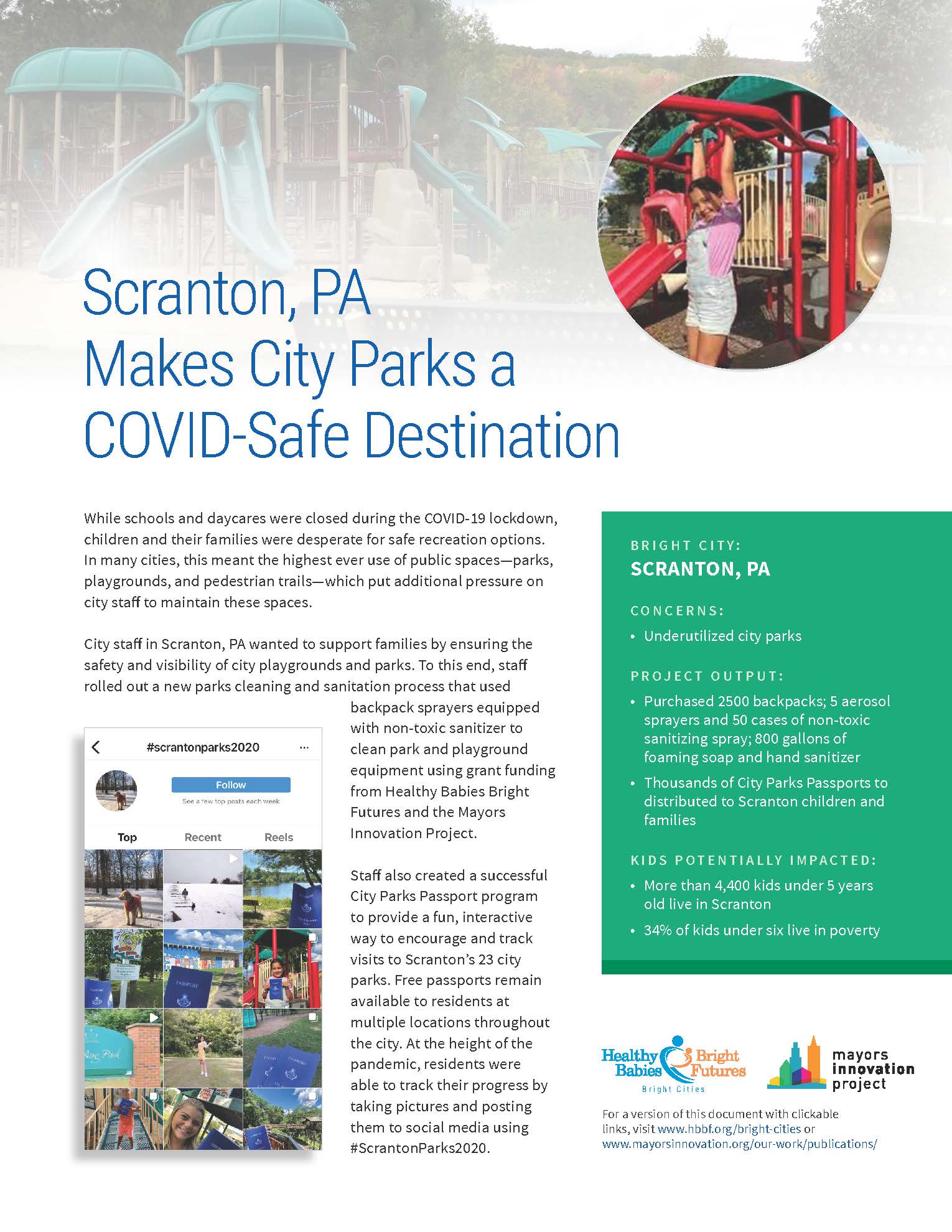
While schools and daycares were closed during the COVID-19 lockdown, children and their families were desperate for safe recreation options. In many cities, this meant the highest ever use of public spaces—parks, playgrounds, and pedestrian trails—which put additional pressure on city staff to maintain these spaces. City staff in Scranton, PA wanted to support families by ensuring the safety and visibility of city playgrounds and parks. To this end, staff rolled out a new parks cleaning and sanitation process that used backpack sprayers equipped with non-toxic sanitizer to clean park and playground equipment using grant funding from Healthy Babies Bright Futures and the Mayors Innovation Project.
Document -
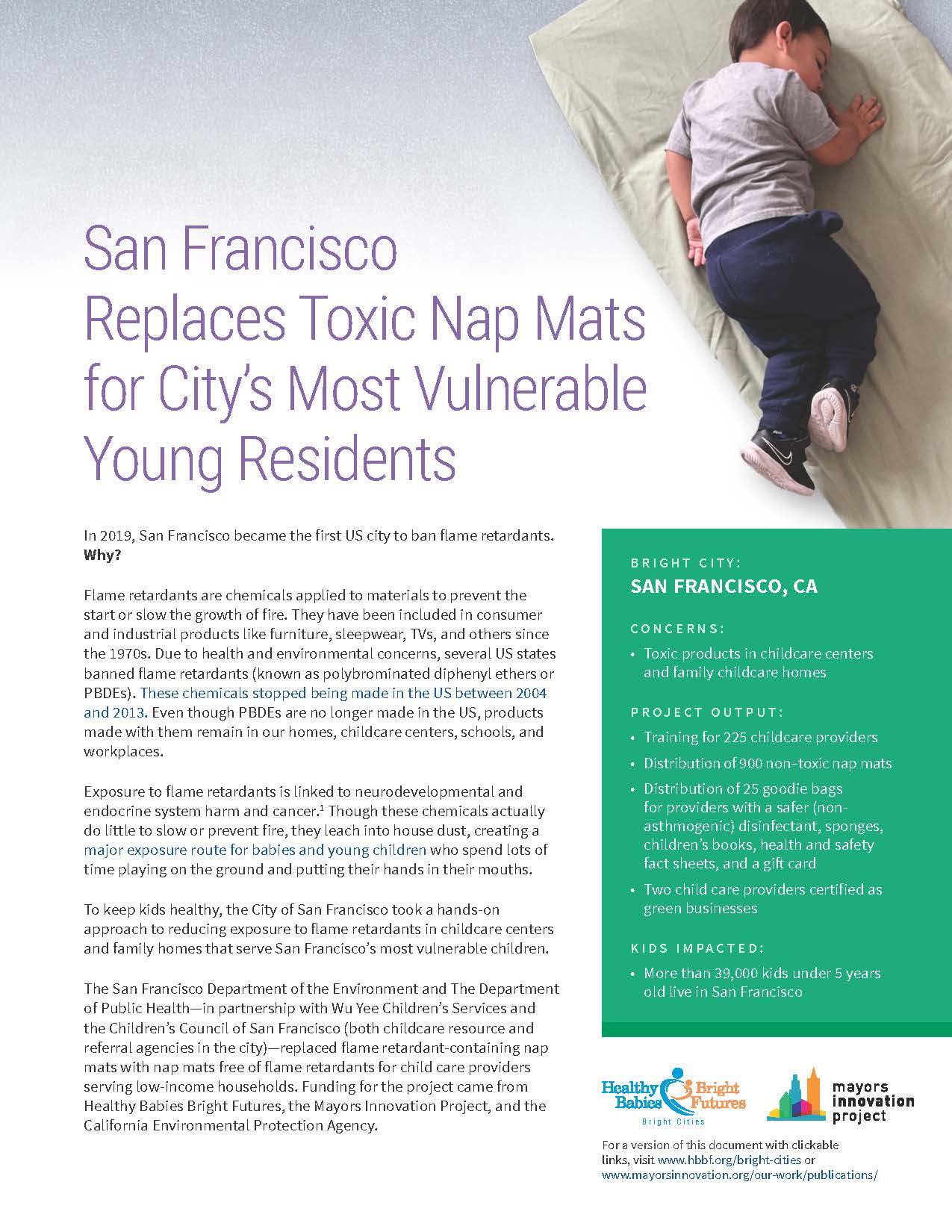
In 2019, San Francisco became the first US city to ban flame retardants. Why?
Flame retardants are chemicals applied to materials to prevent the start or slow the growth of fire. They have been included in consumer and industrial products like furniture, sleepwear, TVs, and others since the 1970s. Due to health and environmental concerns, several US states banned flame retardants (known as polybrominated diphenyl ethers or PBDEs). These chemicals stopped being made in the US between 2004 and 2013. Even though PBDEs are no longer made in the US, products made with them remain in our homes, childcare centers, schools, and workplaces.
Exposure to flame retardants is linked to neurodevelopmental and endocrine system harm and cancer.1 Though these chemicals actually do little to slow or prevent fire, they leach into house dust, creating a major exposure route for babies and young children who spend lots of time playing on the ground and putting their hands in their mouths. To keep kids healthy, the City of San Francisco took a hands-on approach to reducing exposure to flame retardants in childcare centers and family homes that serve San Francisco’s most vulnerable children.
Document -
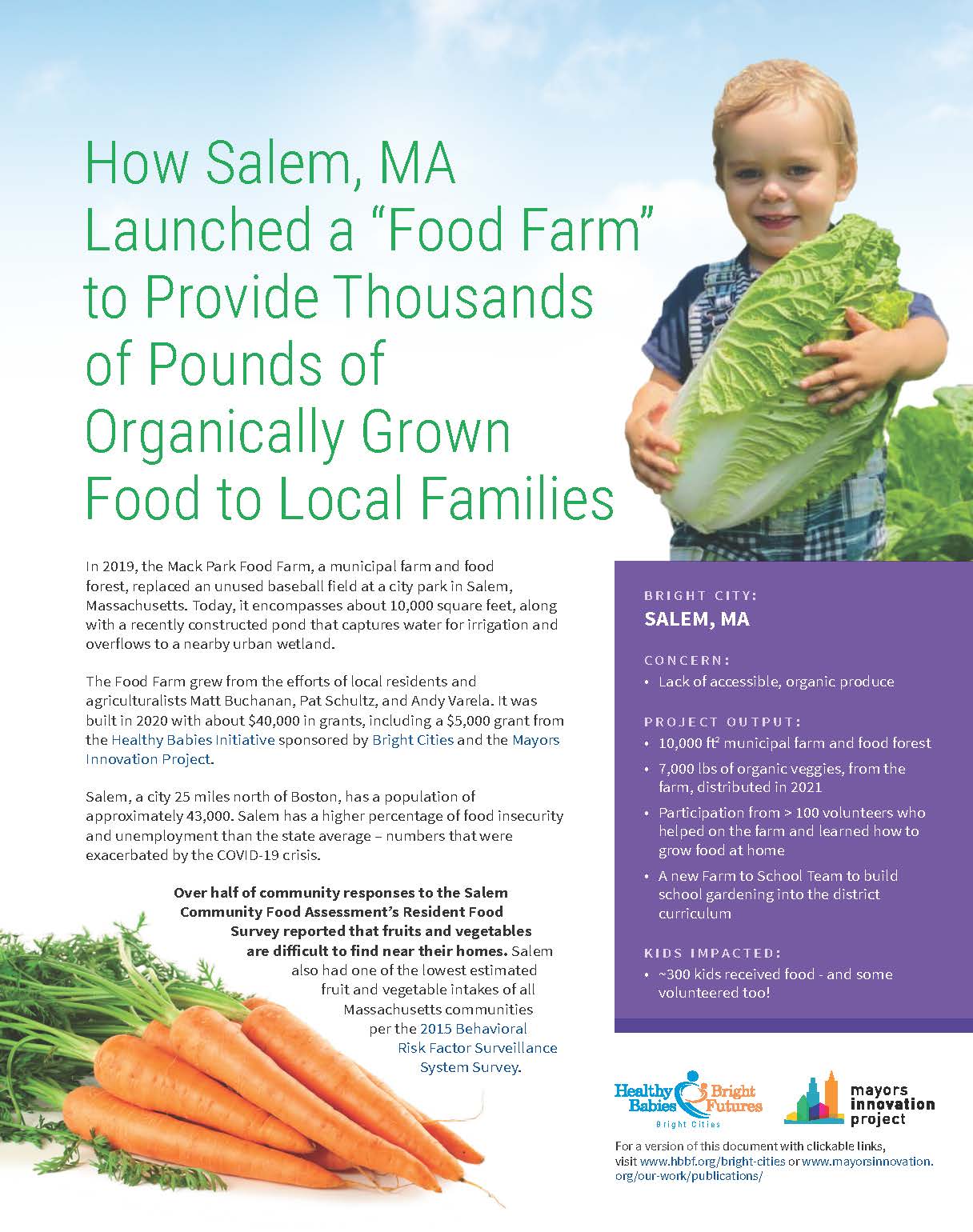
In 2019, the Mack Park Food Farm, a municipal farm and food forest, replaced an unused baseball field at a city park in Salem, Massachusetts. Today, it encompasses about 10,000 square feet, along with a recently constructed pond that captures water for irrigation and overflows to a nearby urban wetland. The Food Farm grew from the efforts of local residents and agriculturalists Matt Buchanan, Pat Schultz, and Andy Varela. It was built in 2020 with about $40,000 in grants, including a $5,000 grant from the Healthy Babies Initiative sponsored by Bright Cities and the Mayors Innovation Project.
Document -
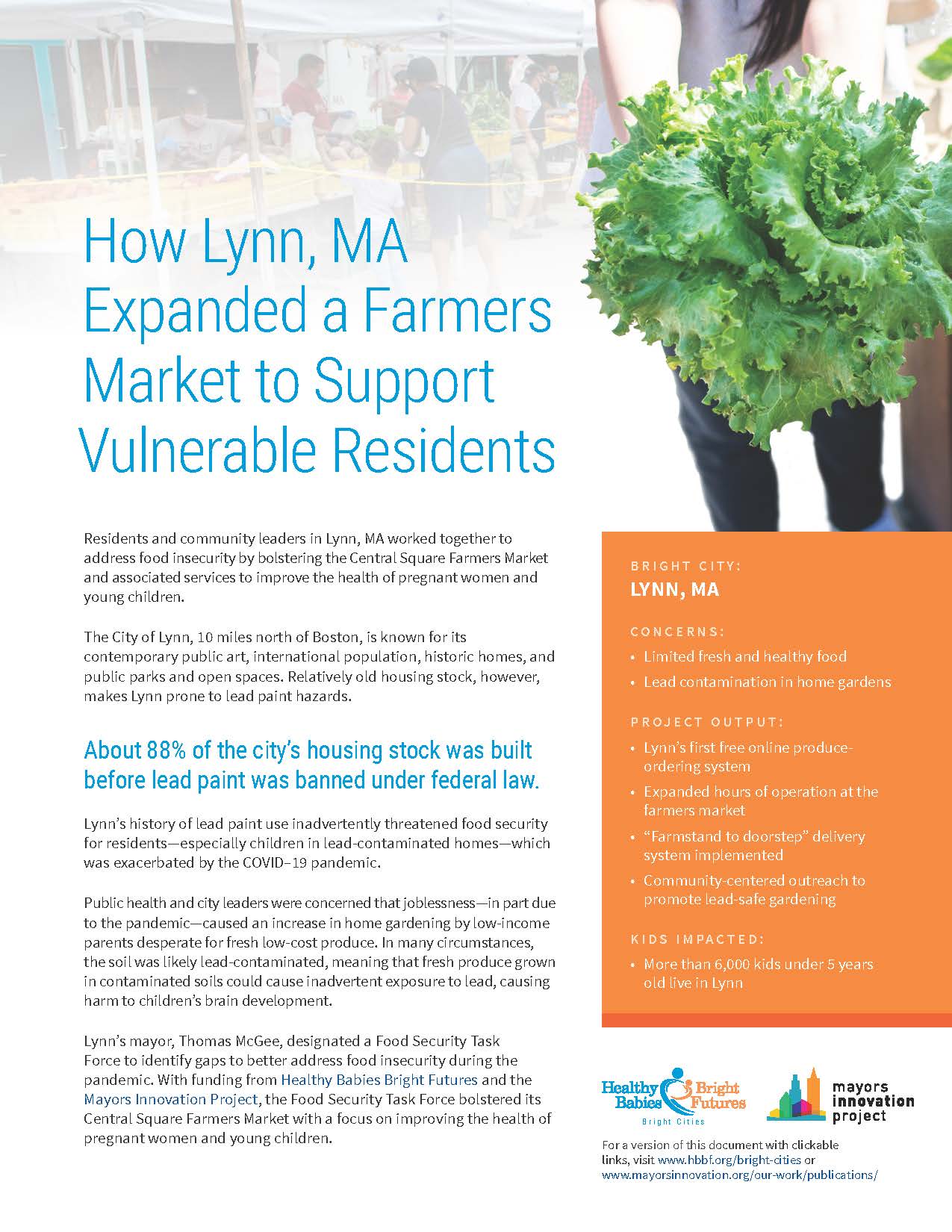
Residents and community leaders in Lynn, MA worked together to address food insecurity by bolstering the Central Square Farmers Market and associated services to improve the health of pregnant women and young children. The City of Lynn, 10 miles north of Boston, is known for its contemporary public art, international population, historic homes, and public parks and open spaces. Relatively old housing stock, however, makes Lynn prone to lead paint hazards.
Document -
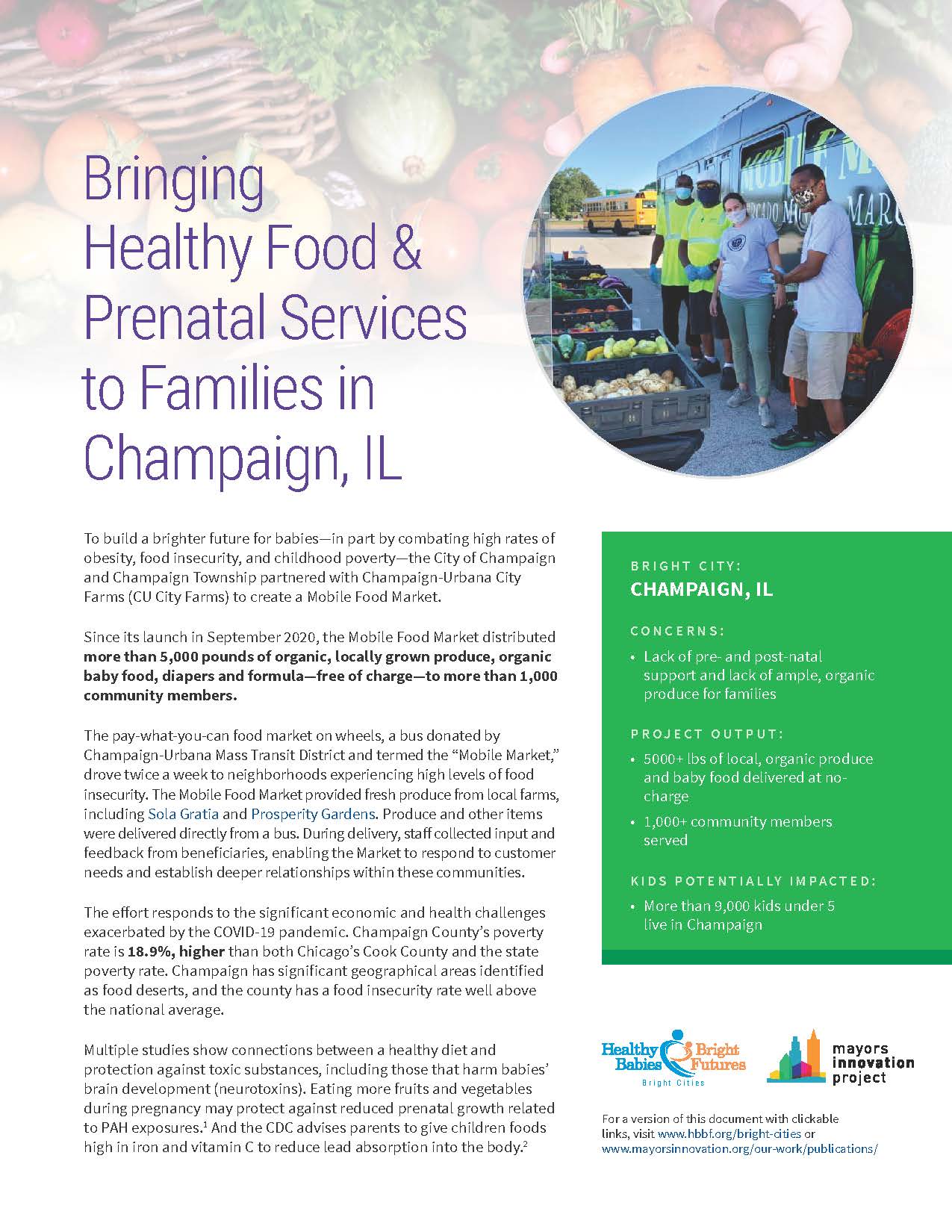
To build a brighter future for babies—in part by combating high rates of obesity, food insecurity, and childhood poverty—the City of Champaign and Champaign Township partnered with Champaign-Urbana City Farms (CU City Farms) to create a Mobile Food Market. Since its launch in September 2020, the Mobile Food Market distributed more than 5,000 pounds of organic, locally grown produce, organic baby food, diapers and formula—free of charge—to more than 1,000 community members.
Document -
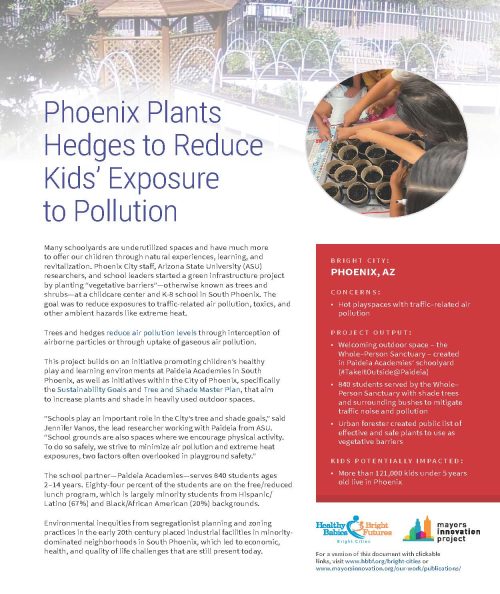
Many schoolyards are underutilized spaces and have much more to offer our children through natural experiences, learning, and revitalization. Phoenix City staff, Arizona State University (ASU) researchers, and school leaders started a green infrastructure project by planting “vegetative barriers”—otherwise known as trees and shrubs—at a childcare center and K-8 school in South Phoenix. The goal was to reduce exposures to traffic-related air pollution, toxics, and other ambient hazards like extreme heat.
Document -
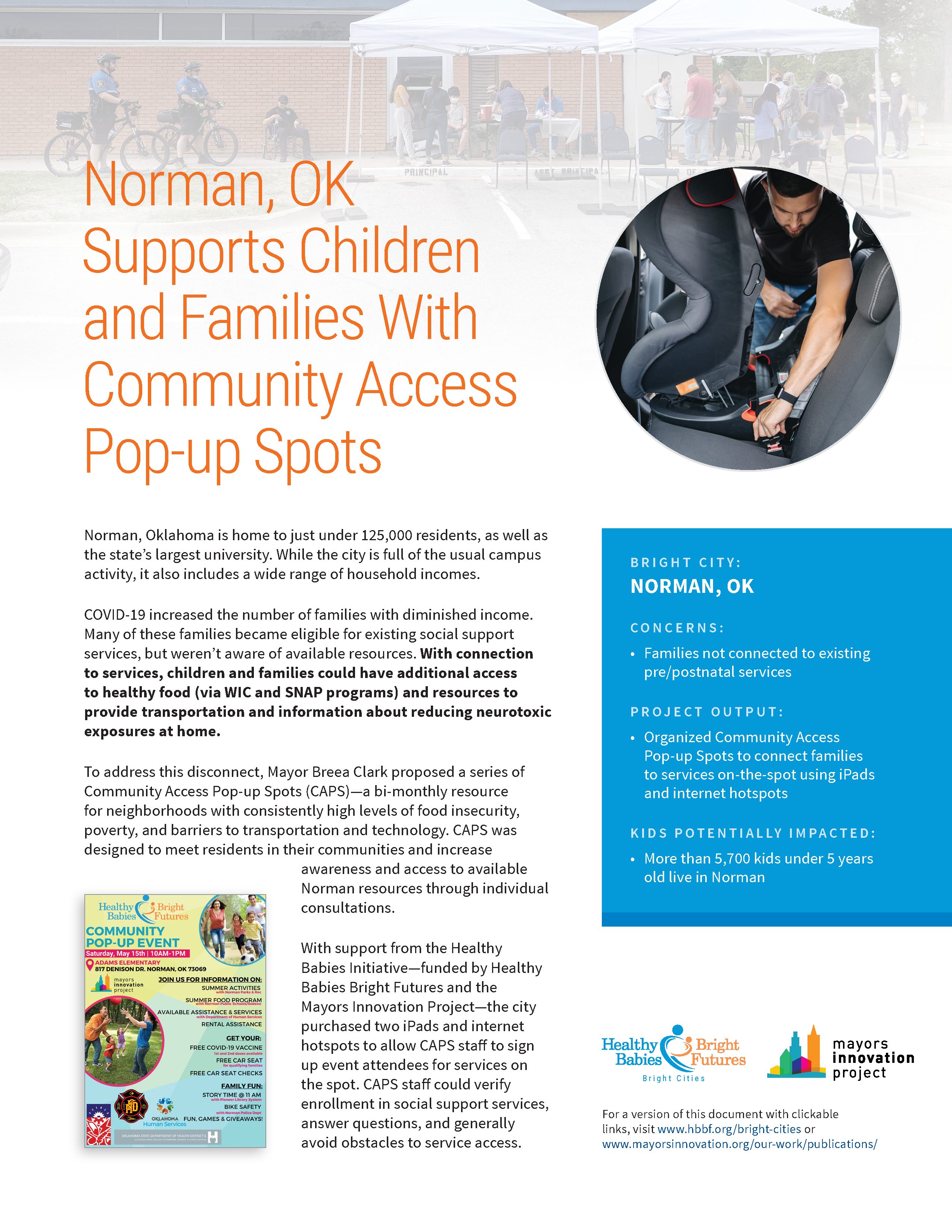
Norman, Oklahoma is home to just under 125,000 residents, as well as the state’s largest university. While the city is full of the usual campus activity, it also includes a wide range of household incomes. COVID-19 increased the number of families with diminished income. Many of these families became eligible for existing social support services, but weren’t aware of available resources. With connection to services, children and families could have additional access to healthy food (via WIC and SNAP programs) and resources to provide transportation and information about reducing neurotoxic exposures at home.
Document
A peer learning network for mayors and city leaders.