
-
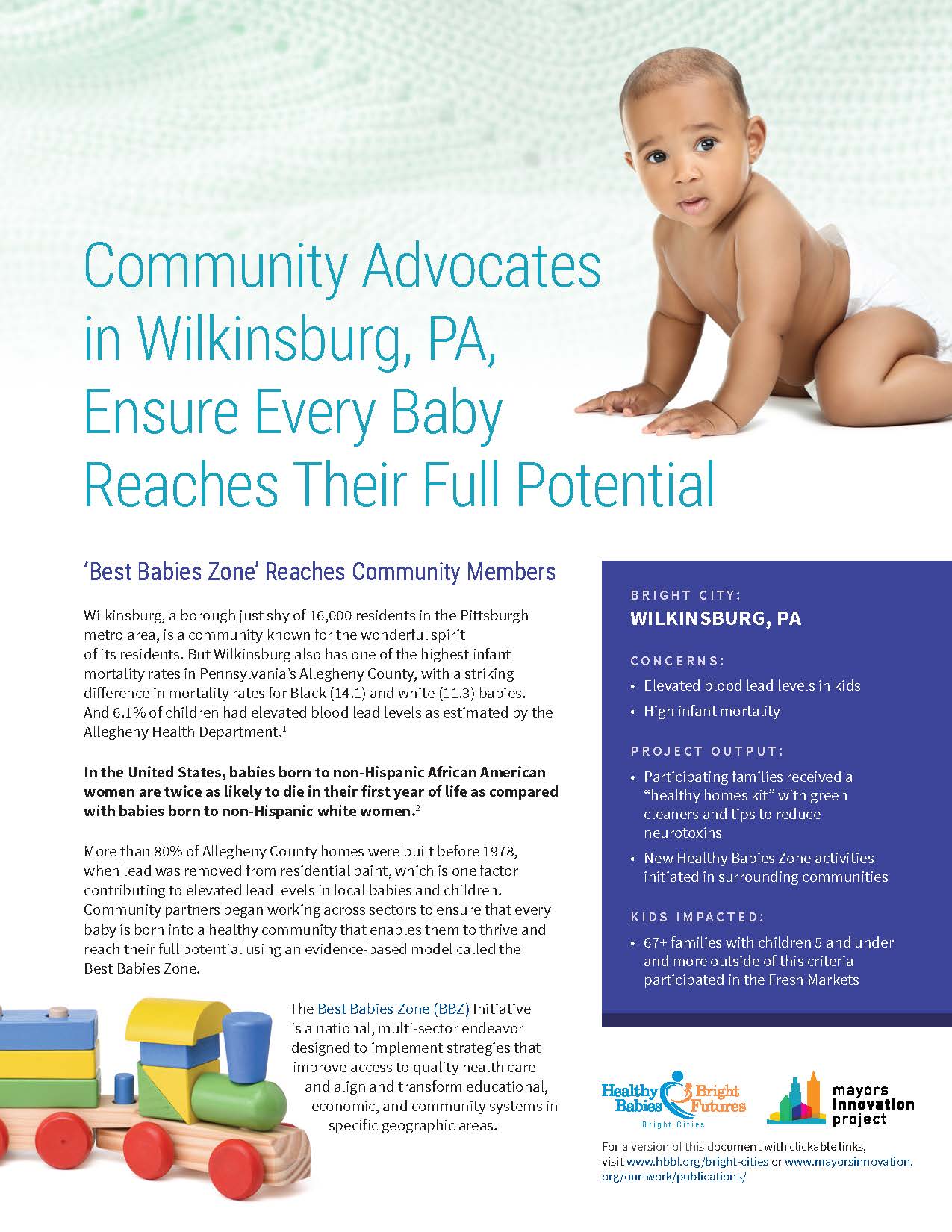
Wilkinsburg, PA has one of the highest infant mortality rates in Pennsylvania’s Allegheny County, with a striking difference in mortality rates for Black and white babies. And 6.1% of children had elevated blood lead levels as estimated by the Allegheny Health Department. Community partners began working across sectors to ensure that every baby is born into a healthy community that enables them to thrive and reach their full potential using an evidence-based model called the Best Babies Zone.
Document -
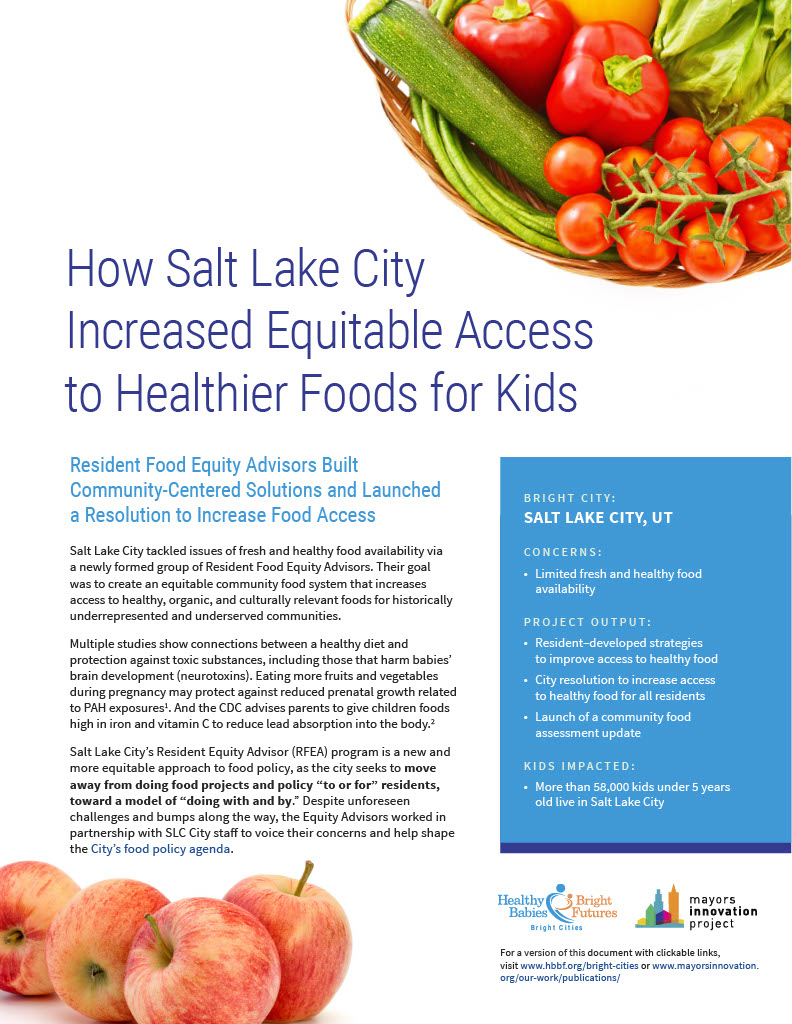
Salt Lake City is tackling issues of fresh and healthy food availability via the Resident Food Equity Advisors. Its goal is to help create an equitable community food system that increases access to healthy, organic, and culturally relevant foods for historically underrepresented and underserved communities. Over the course of a year, the Advisors worked in partnership with City staff to voice their concerns and help shape the City’s food policy agenda.
Document -
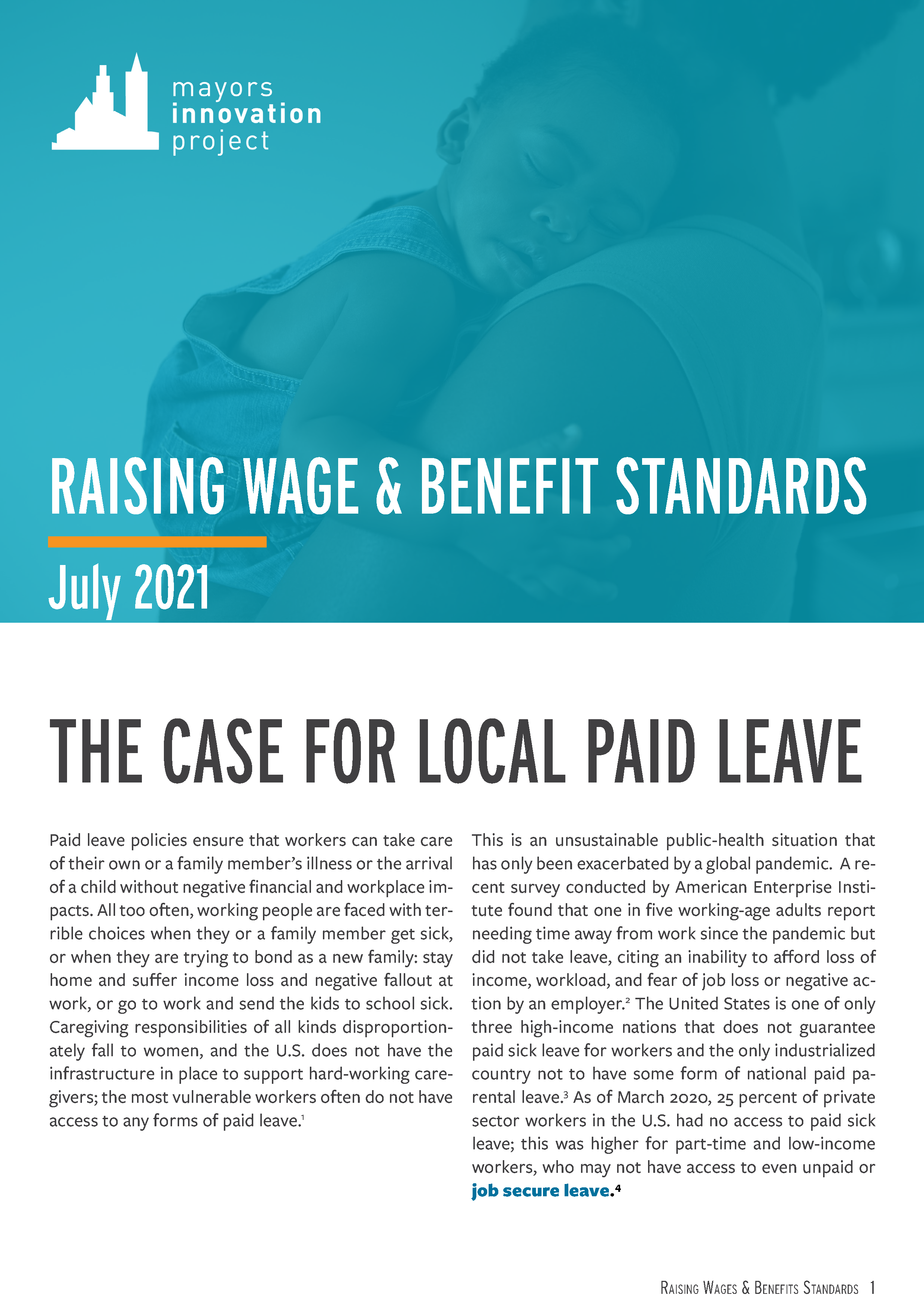
COVID-19 has created a window of opportunity for advancing paid leave.
Amidst an ongoing economic recovery and global health crisis, providing paid leave is a benefit for both businesses and families. Across the board, paid leave policies have found positive benefits. However, without federal support, the burden falls to local governments.
How can cities make it happen?
Document -
What can municipal governments (counties, cities and towns), still suffering from all the pain and disruption that COVID has brought to their communities and economies, do now to hasten their recovery and build resilience for the future, while also addressing past inequity? Here are seven essential steps to take, all proven, with real-world examples and implementation examples for each, that complement each other and can be done simultaneously.
Document -
The U.S. is among the most unequal societies in the world. To address these inequalities, city leaders, including mayors, should play a critical role in community wealth building. This brief profiles three cities, Nashville, Detroit, and Lafayette, LA, on the unique ways that leaders in these cities are building community wealth and their local democratic systems. City leaders, including mayors, are this brief’s intended audience. However, as highlighted in each example, this work requires multiple actors, including community organizers and developers. This brief is useful to anyone committed to equitable economic development in their community.
Document -
Aging water infrastructure systems, climate change, and the general rising cost of urban living mean that access to clean and affordable water is becoming a greater challenge. Cities and water utilities are increasingly faced with a major financial dilemma: increase rates to update infrastructure and price out ratepayers, or keep rates static at the expense of aging and failing infrastructure. At the fulcrum of this choice sits those most vulnerable to increases in rates: low-to-moderate income households, which are disproportionately made up of women and/or people of color.
Document -

From climate change to outdated infrastructure to lack of federal support, city leaders face more pressure than ever to provide affordable and safe water to residents. Mayors and city leaders need the resources to plan for and improve and maintain public water systems. This report outlines concrete actions a city can take to keep control of its water systems and provides a background to understanding the complexity of public water systems and their current challenges. The solutions for managing robust public systems include topics such as: integrating management approaches for water with other goals; engaging the public in conversations about this valuable resource; promoting affordability of water services; among many more.
Document -
Access to safe and affordable drinking water is a human right, and it is the duty of the water utility to ensure that this right is protected and upheld. Understanding the different ways water intersects with your city is critical. Basic Water Utility Management provides local leaders with a foundation for understanding their local water systems, including: understanding what a successful water system looks like; getting up to speed on government compliance; identifying infrastructure and maintenance needs; and engaging with community members around water resources.
Document -
Even as the scale of needed investment grows, utilities can develop rate structures, impact fees, and new products or services that generate needed revenue fairly. This report is a primer on getting started with financing water systems, including: assessing where the largest costs are incurred and where borrowing is most extensive; understanding your city’s specific water utility structure and financial status; building a relationship with your water utility manager/CEO(s); and reaching out to and growing relationships with community leaders across a range of neighborhoods and interests, and asking questions about needs and water affordability.
Document -
Climate change poses a risk to communities and their investments. There is a growing toolbox of measures cities can take to combat climate change. One of these tools, divestment from fossil fuels, is ethical, viable, and a moral imperative. Successful divest/invest strategies are a matter of political will. Steps a city can take: determine if they have funds that should be divested; reinvest the capital moved from fossil fuel stocks to a Green Bank or Revolving Loan Fund; identify what opportunities there are to attract “fossil free” investments to sustainable projects via green bonds or other mechanisms; ensure that any jobs created through this process are quality jobs.
Document
A peer learning network for mayors and city leaders.