
-
Transit service provides a critical link for people in cities. Rather than throw up their hands in the face of falling ridership and revenue streams, cities need to invest in this critical resource. Doing so can provide a wealth of co-benefits that cities care about: the environmental benefits of reducing congestion and car travel; economic benefits of connecting people and jobs; and reducing inequities by providing better access to historically disadvantaged people and neighborhoods. Leading on Transit, describes how cities, in partnership with their transit agencies, public, and other agencies and institutions, can work to enhance transit.
Document -
Traditional Transportation Demand Management (TDM) strategies are increasingly used by large employers and building owners to encourage the use of alternatives to driving – things like providing bus passes, bike share, and affordable carpooling. But most existing best practices overlook the role of local government decision makers, whose decisions on policy affecting local transportation options, planning and regulation of land use, structure and enforcement of fees, taxes and other financial signals can play a big role in increasing or decreasing vehicle demand.
Document -
As the federal government takes an increasingly hostile stance on immigration over the last 30 years, immigrant communities have become more vulnerable than ever. With the absence of a comprehensive national policy, cities must develop policies and programs to address the influx of immigrants. Municipalities across the U.S. have to address on a daily basis a myriad of issues related to immigrants, who are overwhelmingly concentrated in metropolitan areas. This report aims to help elected officials, policy-makers, activists, and community-based organizations advocate for, design, and implement progressive policies toward immigrants at the city level.
Document -
President Donald Trump’s announced withdrawal of the U.S. from the Paris Climate Agreement is a clear shirking of responsibility on behalf of the federal government, but across the country, organizers, activists, mayors, governors and others are only increasing their commitment to the principles of the agreement. Mayors and their cities have many ways to contribute to sound climate policy and carbon reduction. Here we introduce some of the key ways that cities can make a difference in the face of federal inaction.
Document -
Integrated water management (IWM) offers a framework for managing all water within cities as a resource, reducing waste while capturing value, and seeking to integrate water into other city planning. The benefits of IWM include better resource management, development opportunities, and creative funding to improved recreational areas. This report provides an overview of the potential for IWM in cities from the big-picture framework down to examples of tools used by cities on the ground. IWM includes tools like protection of natural lands near waterways, capture of rain as a resource, an end to “waste” water, and planning for climate resilience.
Document -
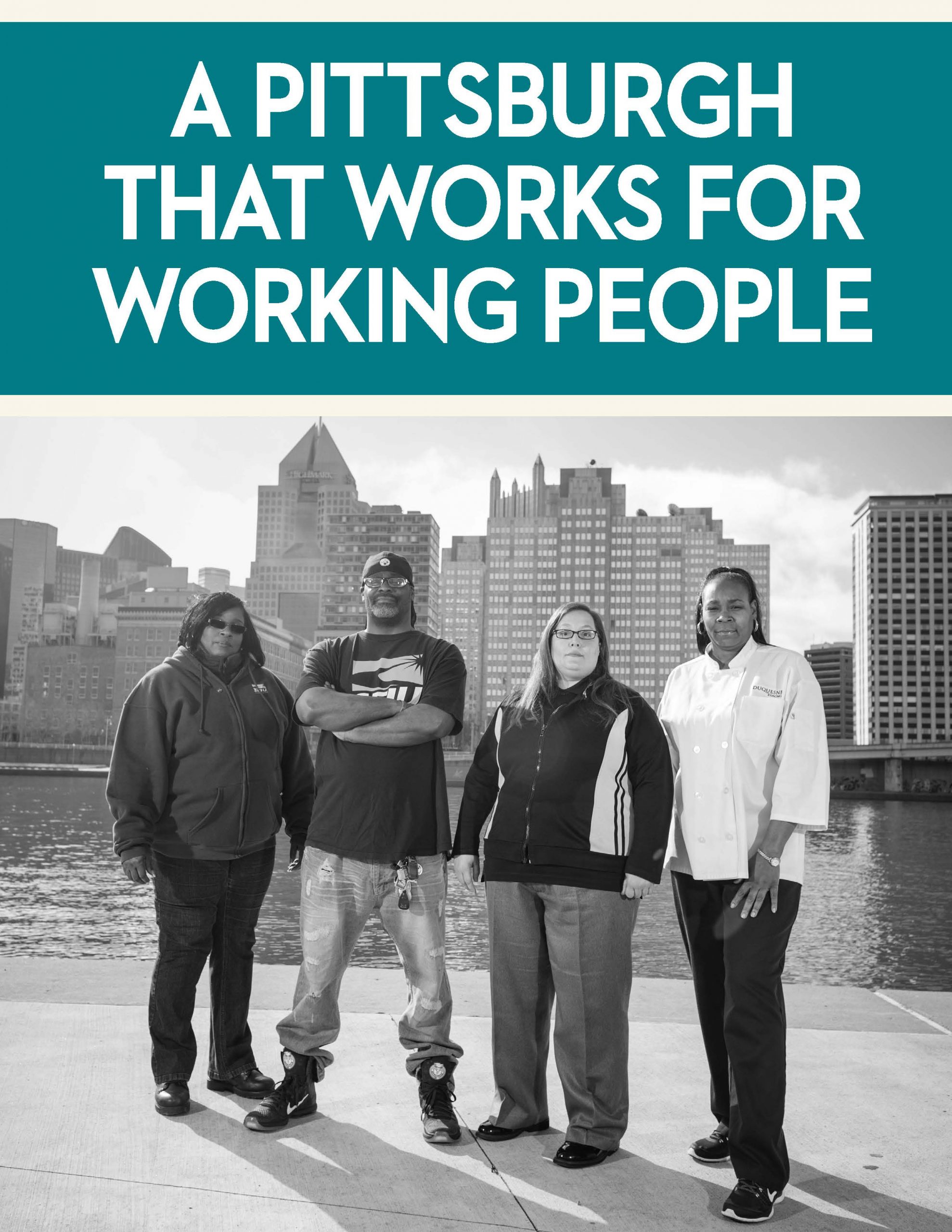
The vision presented in this report is one in which Pittsburgh is known as the city that rebuilt its economy into one of broadly shared prosperity and strong labor standards; with a housing market that meets the needs of long-term residents while also welcoming newcomers; that offers equitable, accessible and safe transportation choices that connect all residents to employment and other critical destinations; and that prioritizes strong community-police relations with historically marginalized communities of color and new immigrants to ensure Pittsburgh is a most livable city for all residents.
Document -
The District of Columbia is going through a period of great transformation. While it has successfully strengthened its fiscal health and its economy and population have grown, its prosperity has not been evenly distributed. However, it is not too late for the District to adopt measures that strengthen low income communities and communities of color and push back against the trend of growing inequality. The new administration has a fresh opportunity to tackle these challenges. It will be essential that key leaders in the administration are driven by a strong vision for how to make the District work for all of its residents.
Document -
Undoubtedly, parking is an important asset to many American cities and, as such, should be viewed as an integral piece of the each city’s transportation and land use system. However, like any land use or any piece of transportation infrastructure, it must be managed properly to ensure it works efficiently and adds value to the community. City officials can accomplish this by leveraging municipally owned parking—both onstreet and off—and by regulating and taxing privately owned parking.
Document -
Nearly one in four Boston families lives in poverty and incomes in the Greater Boston area are more unequally distributed than in the vast majority of other metro areas around the country. The good news is that the City has a number of important tools that can be engaged to address these problems. However, in order to maximize its effectiveness, the City will have to re-focus and re-organize its approach to economic development. Critically, the City must make combatting poverty and inequality a core priority in all of its programs. Moreover, the City should adopt a broader and more proactive vision of economic development and reorganize programs and structures accordingly. This report, co-written with SEIU 32BJ, identifies five key ways in which the City can re-focus and re-organize its programs and provides a number of specific recommendations of steps the City should take.
Document -
Freight transportation is a critical element of both our national and local economies. Yet, it creates a number of challenges for cities due to congestion, emissions, crashes, noise and other factors. This report provides cities with low cost policy-driven measures to reduce the negative impacts of freight transportation. Increasing the efficiency of freight movement and addressing the social costs and environmental justice issues of freight transportation are not mutually exclusive. The strategies identified in this report can help cities meet their transportation challenges in the years ahead while promoting just, healthy, and sustainable freight practices.
Document
A peer learning network for mayors and city leaders.